
Ground Solar Mounting System Guide for Commercial PV Projects
How soil condition, foundation type and load requirements shape the choice between aluminum, pile and galvanized steel ground systems.
- 1Soil conditions decide foundation choice: ground screws for rocky/sandy soil, driven piles for cohesive soil.
- 2Hot-dip galvanized steel (Q235B/Q355B) provides high strength and corrosion protection for ground solar mounting systems.
- 3Tilt angle and ground clearance affect wind pressure and snow accumulation parameters.
- 4Single-post vs N-type/C-type dual-post structures offer different installation efficiency and steel tonnage.
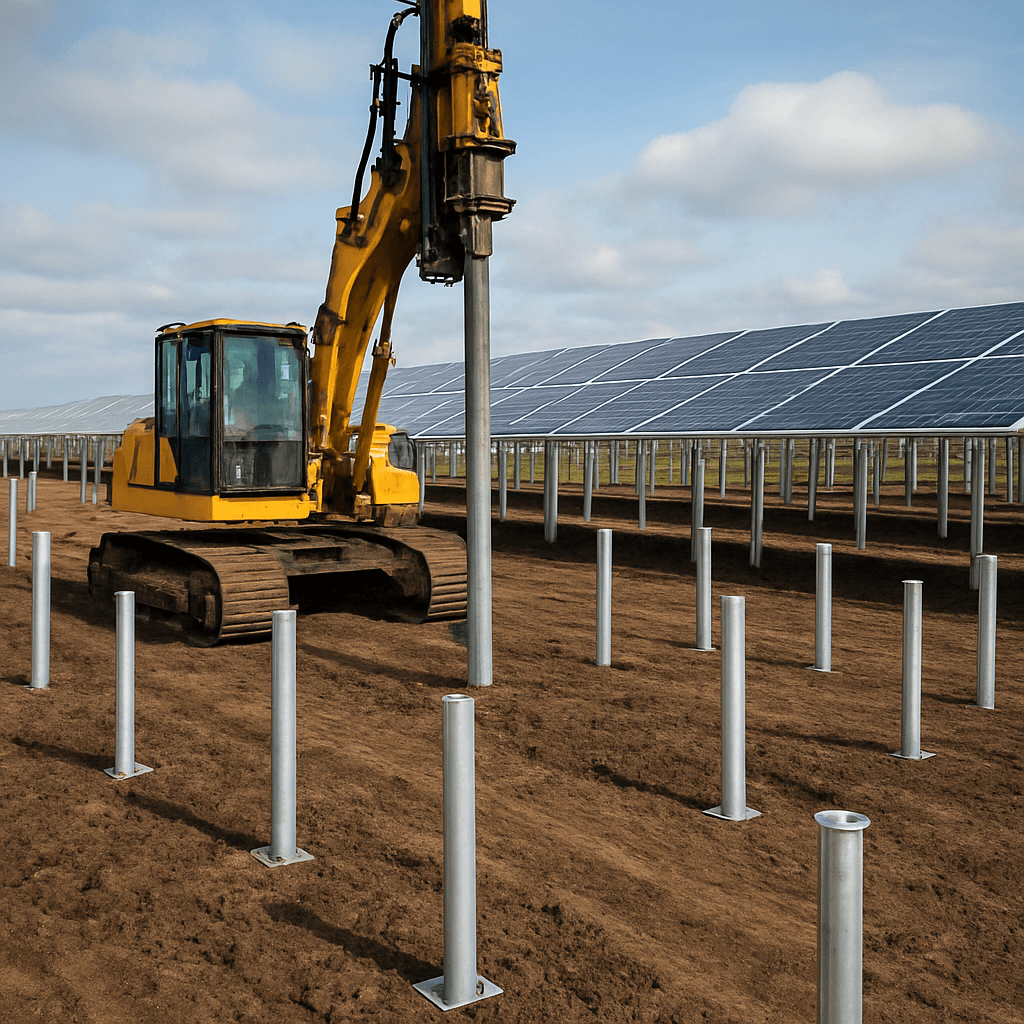
Selecting the Foundation: Ground Screws vs. Driven Piles
For commercial and utility ground-mounted solar projects, foundation selection represents a major share of installation time and cost. Ground screws are ideal for rocky terrain, gravel, or uneven terrain where concrete pouring is impractical. Driven C-piles excel in open plains with soft to medium soil.
Corrosion Protection and Steel Coating Thickness
Ground structures are exposed to ambient soil moisture and atmospheric corrosion for 25+ years. Hot-dip galvanization with an average zinc coating thickness of ≥55µm to 85µm guarantees long-term durability in accordance with ISO 1461.
When are ground screws preferred over concrete foundations?
Ground screws eliminate curing time, reduce site excavation, and can be installed in rocky or sloped ground immediately ready for racking assembly.
XINVOK Technical Team shares practical knowledge about PV mounting systems, roof interfaces, ground foundations, accessories, and engineering specifications for B2B buyers worldwide.
Sourcing Solar Mounting Systems for Your Project?
Need engineering support, drawing review, or customized BOM quotation? Contact XINVOK for project coordination.