
Roof Solar Mounting Systems for Real Roof Conditions
Roof mounting selection starts with the roof interface. Metal roofs, standing seams, tile roofs, flat concrete roofs and asphalt shingles require different attachment methods, waterproofing considerations and accessory combinations.
XINVOK supports roof mounting supply with rails, clamps, roof hooks, fasteners and related components matched according to roof type, module layout and project requirements.
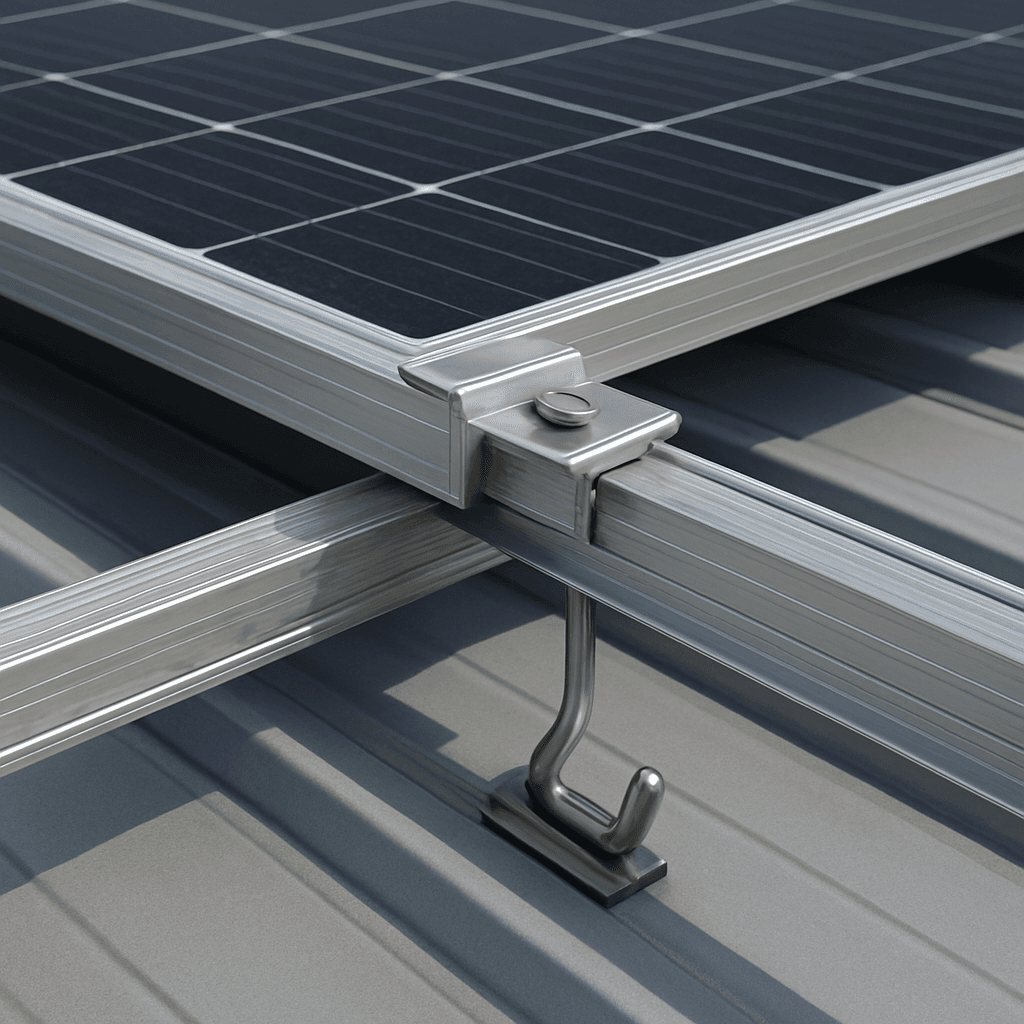
ROOF INTERFACE
The Roof Interface Sets the Mounting Logic.
The same module layout can require a very different mounting configuration when the roof material changes.
A standing-seam roof may require non-penetrating seam clamps.
A trapezoidal metal roof may require different brackets, screws or sealing details.
Tile roofs usually require roof hooks and suitable flashing or waterproofing consideration.
Flat concrete roofs introduce different support and anchoring conditions.
The roof interface should therefore be confirmed before rails, hooks, clamps and fasteners are finalized.
Roof Type Changes the Mounting Interface
| Roof Type | Typical Mounting Direction | Information to Confirm | Common Procurement Risk |
|---|---|---|---|
| Standing Seam Metal Roof | Seam clamp / compatible rail interface | Seam profile, dimensions, module layout | Using a clamp that does not match the seam geometry |
| Trapezoidal Metal Roof | L-foot / bracket / direct attachment depending on system | Sheet profile, thickness, fixing position | Incorrect bracket or waterproofing detail |
| Tile Roof | Roof hook + rail system | Tile type, rafter position, roof structure | Hook geometry interfering with tile placement |
| Flat Concrete Roof | Anchored or project-specific support configuration | Surface condition, layout, tilt requirement | Selecting system before anchoring condition is understood |
| Asphalt Shingle Roof | Roof attachment + flashing consideration | Roof structure, attachment point, waterproofing | Treating it like a metal roof installation |
Module and Clamp Compatibility
Module dimensions and frame height directly affect mid-clamp and end-clamp selection. Do not assume one clamp size fits every module. Rails, clamps, grounding accessories and fasteners should be considered together as a unified roof system.
Key System Features
Multiple Roof Types
Hardware for trapezoidal and standing-seam metal, clay and concrete tile, flat concrete and shingle roofs.
Corrosion Resistant
Rail and fastener options selected for long outdoor service life.
Fast Installation
Pre-assembled clamps and adjustable hooks reduce on-site labor and rework.
Wind & Snow Reviewed
Rail spacing and clamping reviewed against project wind and snow load requirements.
QUOTATION PREPARATION
What to Confirm Before Quotation
Providing these details upfront allows XINVOK to clarify the mounting category and prepare an accurate quotation.
HARDWARE SCOPE
Typical Roof Mounting Hardware Scope
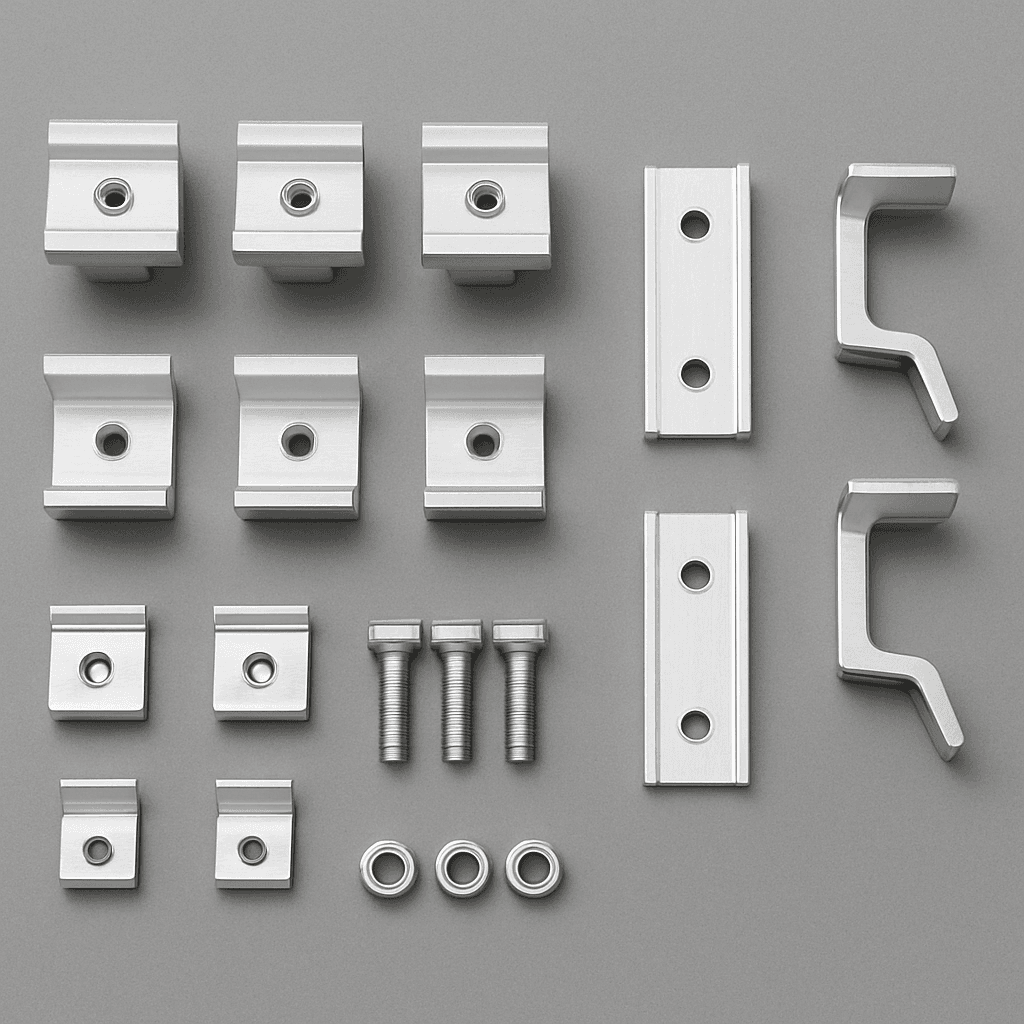
A complete roof mounting BOM typically includes these key component groups:
Solar mounting rails
Aluminum profile, sized to roof layout and load requirements
Rail splices
Joining rail lengths along continuous array runs
Mid clamps & end clamps
Matched to module frame height (30-40mm)
Roof interface brackets
Roof hooks / seam clamps / L-feet matched to roof interface
Fasteners & sealing
EPDM sealing washers, stainless fasteners, expansion anchors
Grounding & bonding
Grounding clips, grounding lugs, and bonding jumpers
Cable management
Cable clips & conduit management accessories
PROCUREMENT RISK MITIGATION
Common Roof Mounting Procurement Mistakes
Avoid these frequent job-site oversights when sourcing roof racking hardware.
Comparing rail price before confirming roof type
Rail costs are a fraction of the total roof kit. Selecting rails without confirming the roof interface leads to incompatible brackets and costly delays.
Ignoring module frame height
Mid and end clamps must match module frame thickness exactly. Mismatched clamps risk module slippage or frame damage.
Ordering hooks without confirming tile profile
Tile shape and rafter spacing dictate hook geometry. Ordering generic hooks can cause tile cracking or height misalignment.
Leaving grounding accessories out of the BOM
Omitting grounding washers, clips, or lugs delays electrical inspection and requires separate express hardware shipments.
Treating all metal roofs as the same interface
Standing seam, trapezoidal, and corrugated metal sheets require fundamentally different clamp, bracket, and sealing solutions.
Confirming waterproofing details too late
EPDM rubber gaskets, sealing washers, and flashing details must be confirmed upfront to maintain roof integrity.
Specifications
| Materials | Material options can be confirmed according to project requirements. |
|---|---|
| Fasteners | Fastener options can be discussed according to installation environment. |
| Roof interface | Hooks, hanger bolts, L-feet and seam clamps. |
| Module compatibility | Clamp options adjustable to common module thicknesses. |
| Wind & snow load | Wind and snow load requirements are reviewed according to project conditions. |
| Warranty | Warranty terms can be discussed according to product type and order requirements. |
Specifications are indicative and confirmed per project. Send your requirement for exact values.
Typical Applications
- Residential rooftops
- Commercial & industrial roofs
- Metal roof PV
- Tile roof PV
- Flat roof ballasted / tilted arrays
Engineering & Solution Resources
FAQ
Frequently Asked Questions
Project Quotation
Prepare Your Roof Project Details
Send the roof type, module information, layout and available project requirements. XINVOK can help clarify the mounting category, accessory requirements and quotation basis.