
Ground Screws for Solar Mounting Foundation Applications
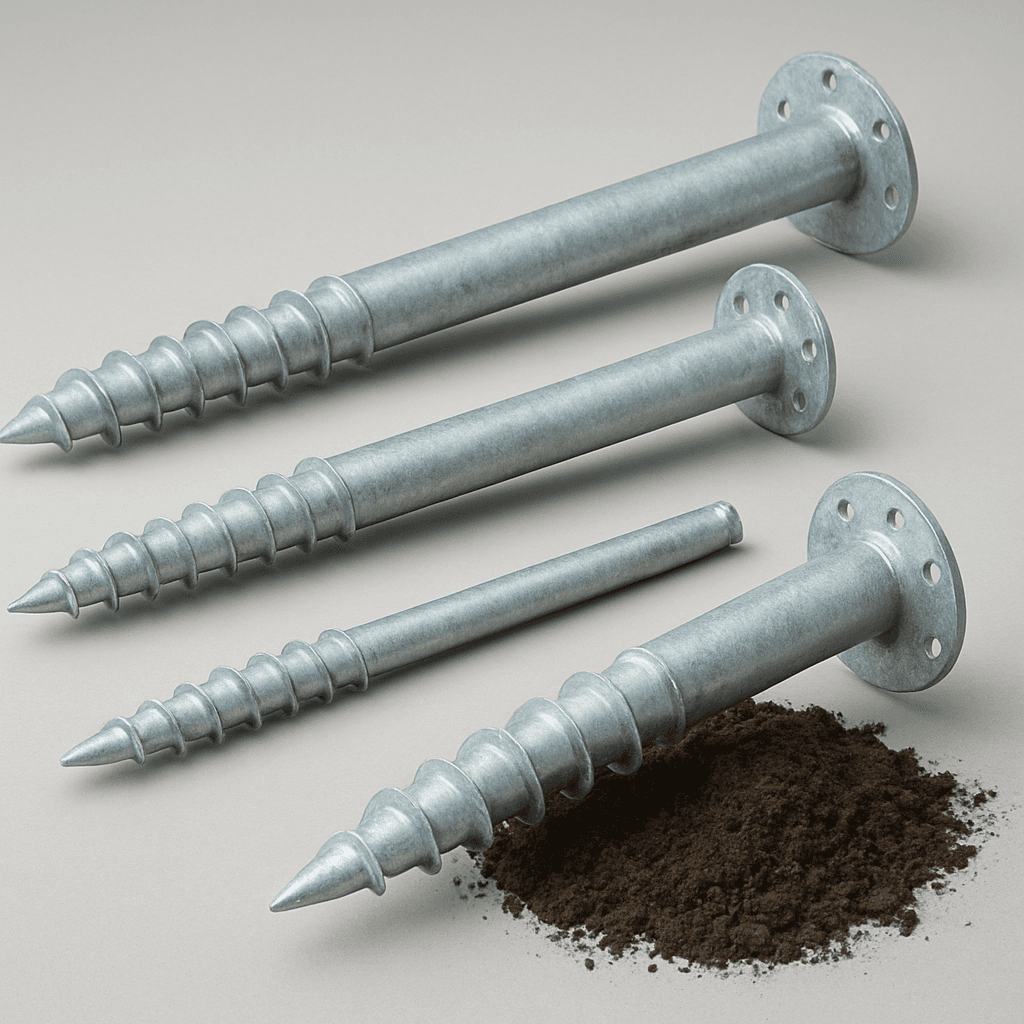
Ground screw selection begins with soil condition and foundation requirements. Length, diameter, interface, installation depth and project testing requirements should be discussed before final supply specifications are confirmed.
FOUNDATION CONDITIONS
Ground Screw Selection Starts with Soil Conditions.
Ground screws cannot be selected on length or tube diameter alone.
Ground screw selection depends on soil conditions, required embedment depth, upper structure interface flange, installation equipment access, and project load expectations.
Sizing ground screws correctly ensures long-term foundation stability.
Ground Screw Specification Inputs
| Input | Why It Matters | |
|---|---|---|
| Soil Condition | Directs tube length, spiral blade pitch, and drive-in feasibility | |
| Required Screw Length | Dictates anchorage depth and soil layer engagement | |
| Diameter & Wall Thickness | Determines structural shear, bending resistance, and tube strength | |
| Head / Interface Type | Ensures bolt-pattern match with upper racking posts (flange vs U-head vs nut-plate) | |
| Installation Method | Influences field machinery selection, drive motor torque, and installer speed | |
| Testing Requirement | Project-specific testing requirements, if applicable, can be discussed according to project specifications |
Ground Screw + Ground Mounting System
Ground screws serve as the direct foundation interface for ground-mounted racking tables. Flange dimensions, bolt hole patterns, and vertical alignment tolerances must match the racking column base plates to ensure rapid field connection without structural modification.
Do Not Treat Ground Screws as Generic Hardware
Treating foundation screws as commodity pipe leads to installation delays or structural under-performance. Soil friction, galvanized coating thickness, thread pitch, and drive head integrity must be evaluated against actual site conditions.
Key System Features
Concrete-Free
Install directly into soil for faster foundations with minimal site disturbance.
Sized by Soil
Lengths and diameters selected for ground condition and pull-out requirement.
Hot-Dip Galvanized
Corrosion-resistant coating for long underground service life.
Removable
Screws can be removed and land restored at end of life.
QUOTATION PREPARATION
What to Send Before Specification Discussion
Provide these foundation parameters to review ground screw options.
PROCUREMENT RISK MITIGATION
Common Ground Screw Foundation Mistakes
Avoid these common ground screw foundation procurement oversights.
Selecting screw length without reviewing soil condition
Screws that are too short in loose soil may not achieve sufficient anchorage; screws that are too long in rocky soil cannot reach full embedment.
Ordering flange head without confirming upper racking base plate
Mismatched flange bolt patterns force costly field drilling or adapter plates.
Overlooking drive torque limits for dense soil
Thick spiral blades require adequate hydraulic drive equipment to reach design depth without damaging the screw head.
Neglecting hot-dip galvanizing coating requirements
Corrosive or acidic soils require verified hot-dip galvanizing thickness for underground service life.
Failing to clarify project testing requirements early
If project specifications call for on-site load or pull-out testing, clarifying these requirements beforehand ensures suitable screw specification.
Specifications
| Materials | Material options can be confirmed according to project requirements. |
|---|---|
| Length | Custom according to project. |
| Diameter | Multiple sizes available. |
| Coating | Coating options can be discussed according to installation environment. |
| Installation | Mechanical drive-in. |
| Pull-out strength | Reviewed per soil condition and project. |
Specifications are indicative and confirmed per project. Send your requirement for exact values.
Typical Applications
- Ground mounting foundations
- Solar carport columns
- Solar fence posts
- Temporary & fast-track sites
FAQ
Frequently Asked Questions

Project Quotation
Discuss Ground Screw Requirements
Send your soil data, ground mounting layout and upper structure interface requirements for a foundation specification review.