
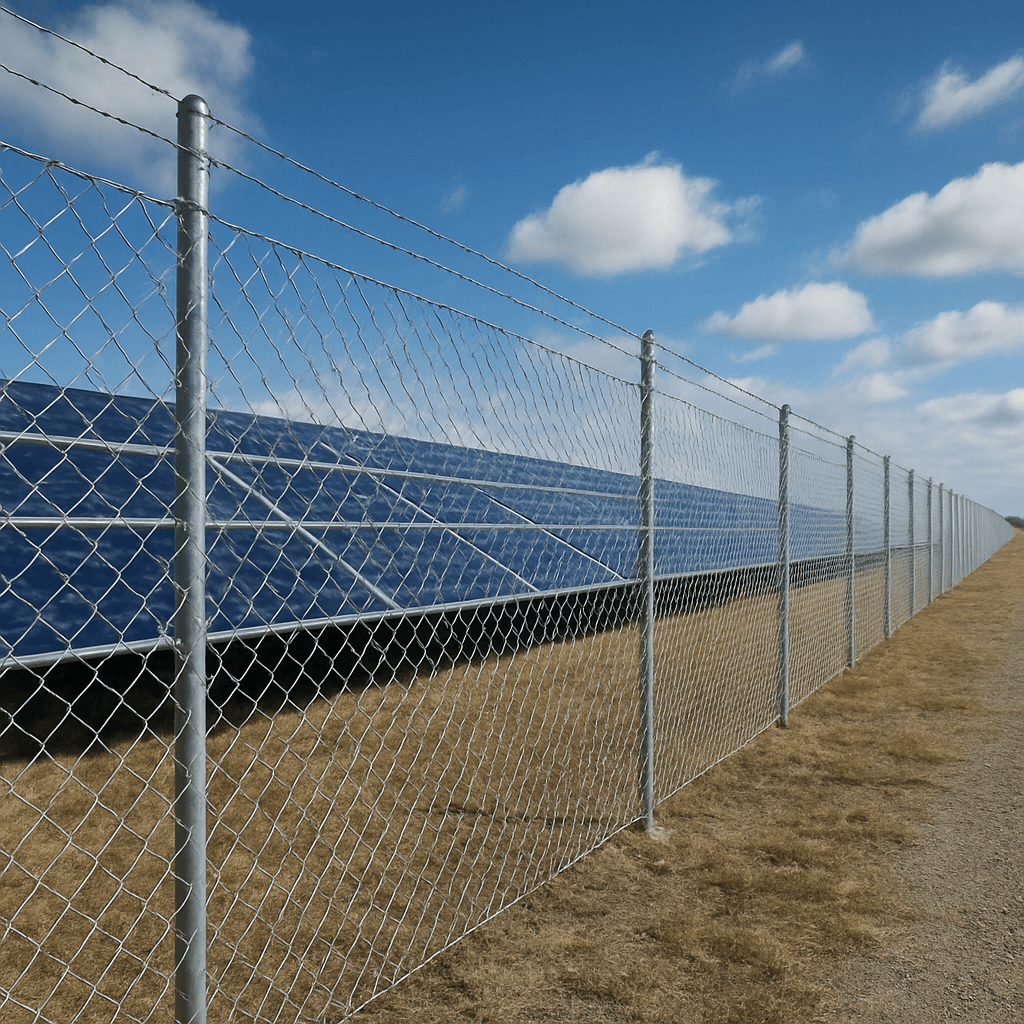
Solar Farm Site Protection Starts with the Perimeter
PV site protection depends on more than fence panel quantity. Perimeter length, terrain, access points, fence height, gate requirements, post configuration, foundation and packing scope all affect the final project requirement.
Define the Boundary Before the Fence BOM.
Utility-scale solar farms and commercial energy sites cover extensive land areas that require physical boundary security. Effective perimeter protection balances security deterrence, terrain sloped installation, vehicle/pedestrian access, and decades of corrosion resistance.
Perimeter Planning Flow
Site Boundary
Map total linear perimeter length and property corner coordinates.
Terrain & Corners
Identify slope variations, corner post locations, and terminal end posts.
Fence Configuration
Select mesh panel, chain link roll, post profile, and fence height.
Gates & Access
Specify vehicle double-swing/sliding gates and pedestrian access points.
Foundation & Packing
Choose driven posts, ground screws, or concrete footings and export packing.
Site Input Matrix for Site Protection
How site boundary conditions define fencing hardware and logistics.
| Project Input | Why It Matters |
|---|---|
| Total Perimeter Length | Establishes total panel/mesh run, line post quantities, and total fastener volume |
| Terrain & Elevation Profile | Dictates stepped or sloped fence panel installation and post height adjustments |
| Fence Height Requirement | Determines post section strength, mesh gauge, and overall security level |
| Corner & End Locations | Requires heavy-duty corner/terminal posts with multi-directional bracing attachments |
| Vehicle Access Gates | Requires reinforced gate posts, hinges, drop bolts, and clear opening widths for heavy trucks |
| Pedestrian Gates | Provides secure personnel access points with latch and lock mechanisms |
| Foundation Condition | Determines post driven depth, ground screw flange interface, or concrete footing size |
| Surface Treatment | Hot-dip galvanizing or PVC coating matched to site atmospheric corrosion environment |
| Export Packing Plan | Ensures post, mesh, gate, and hardware bundles are protected during container transport |
Fence Quantity Alone Is Not a Complete Site Protection Scope
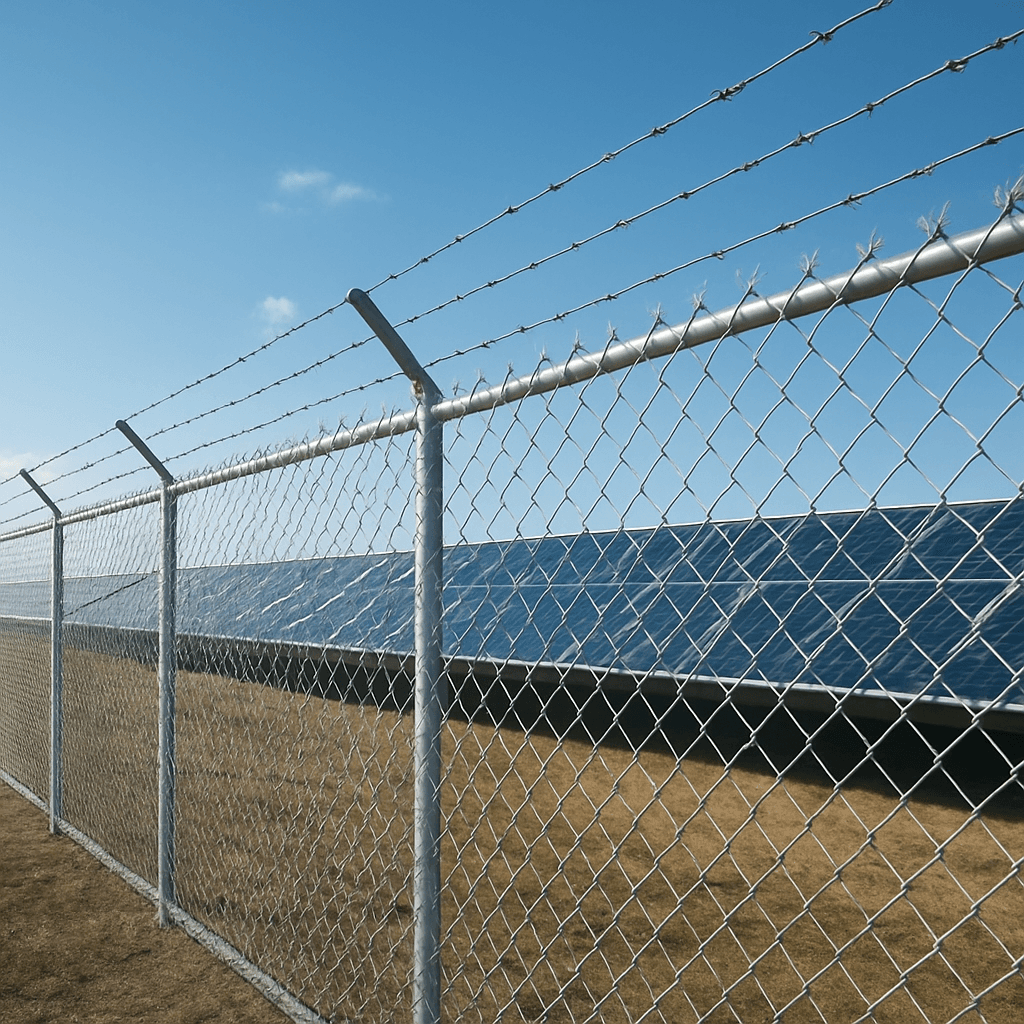
Estimating perimeter fencing solely by multiplying panel width into total meters results in field shortages. A complete site protection Bill of Materials includes line posts, corner/end terminal posts, bracing struts, attachment clips, post caps, fasteners, foundation interface connection, vehicle/pedestrian gates, and protective bundle packing.
Key Risks in Solar Farm Perimeter Fencing Procurement
Avoid these common mistakes when specifying site protection for PV farms.
Counting line posts without corner and end posts
Terminal and corner posts endure multi-directional tension. Using standard line posts at corners leads to structural distortion.
Omitting vehicle access gates from initial RFQ
Adding heavy vehicle gates after ordering mesh panels creates layout mismatches and extra shipping costs.
Ignoring site slope and stepped terrain
Standard rigid mesh panels require custom stepped post mounting on sloped ground. Unplanned slopes create ground gaps.
Underestimating corrosion class requirements
Deploying thin electro-galvanized wire in humid or coastal environments leads to early rust formation along perimeters.
Packing based only on panel quantity
Omitting post caps, connection components, clips, and hardware bolts from the packing list creates site delays.
Site Protection Project Information to Prepare
Details needed to calculate a complete solar farm perimeter fencing quotation.
Relevant Product Categories
Explore the mounting systems and hardware accessories matched to this solution type.
FAQ
Frequently Asked Questions
Start with the Site Boundary
Provide your site boundary dimensions, gate requirements, and fence height to receive a perimeter site protection BOM proposal.